
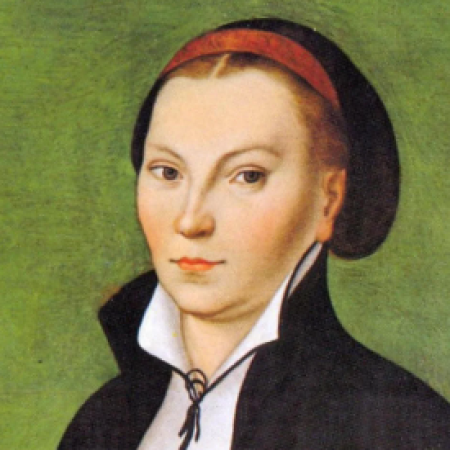
We invite you to join us on WELCA Sunday, January 24, 2027. After the service, we are hosting a birthday party in Kley Hall to honor Martin Luther’s wife, Katie.
Although no documents support this, we believe that Katarina Von Bora was born on January 29, 1499, in Lipendorf, Germany. When Katarina was five years old, her mother died. Shortly after, her father remarried and sent Katie to be educated in a convent in Brehna.
Later Katie was moved to Nimbschen Abbey where she became a nun at age 16. It was there that Katie and a few other nuns became interested in the growing reform movement. Katie wrote to Martin Luther asking for help leaving the abbey. With his help, on April 4, 1523, Katie and her friends escaped to Wittenberg. Martin was able to find husbands or jobs for all but Katie. Although Martin found several suitors for Katarina, none of them proposed. After much thought, and encouragement from friends and Martin’s parents, Martin and Katie married on June 13, 1525.
Katie and Martin’s marriage played a significant role in Protestantism and development of views on marriage. They had six children: three boys and three girls. One of the girls died in infancy and one during her teens. In addition, they raised several orphaned children and Katie’s nephew.
But this is not the end of Katie’s story; there is so much more. Do you know that she:
- managed the family home, a former monastery she converted into a boarding house where she hosted university students, visiting theologians, refugees, and orphans, 30 to 40 at a time;
- ran the Wittenberg Brewery, getting a license and producing a brew so highly regarded that it saved the household an immense amount on beverage costs;
- purchased fields and orchards for food production and livestock, allowing the family to be almost entirely self-sufficient; and
- managed a farm estate in Zülsdorf, a few days’ journey from Wittenberg, where she directly oversaw the harvest and forestry operations that provided a secondary income for the family.
After Martin’s death in 1546, Katie was named his sole heir, but his will could not be executed as it did not conform to law at the time. Until her own death on December 20, 1552, as a result of the Black Plague, Katie lived in poverty.
Please join us on January 24th to celebrate this very special woman!